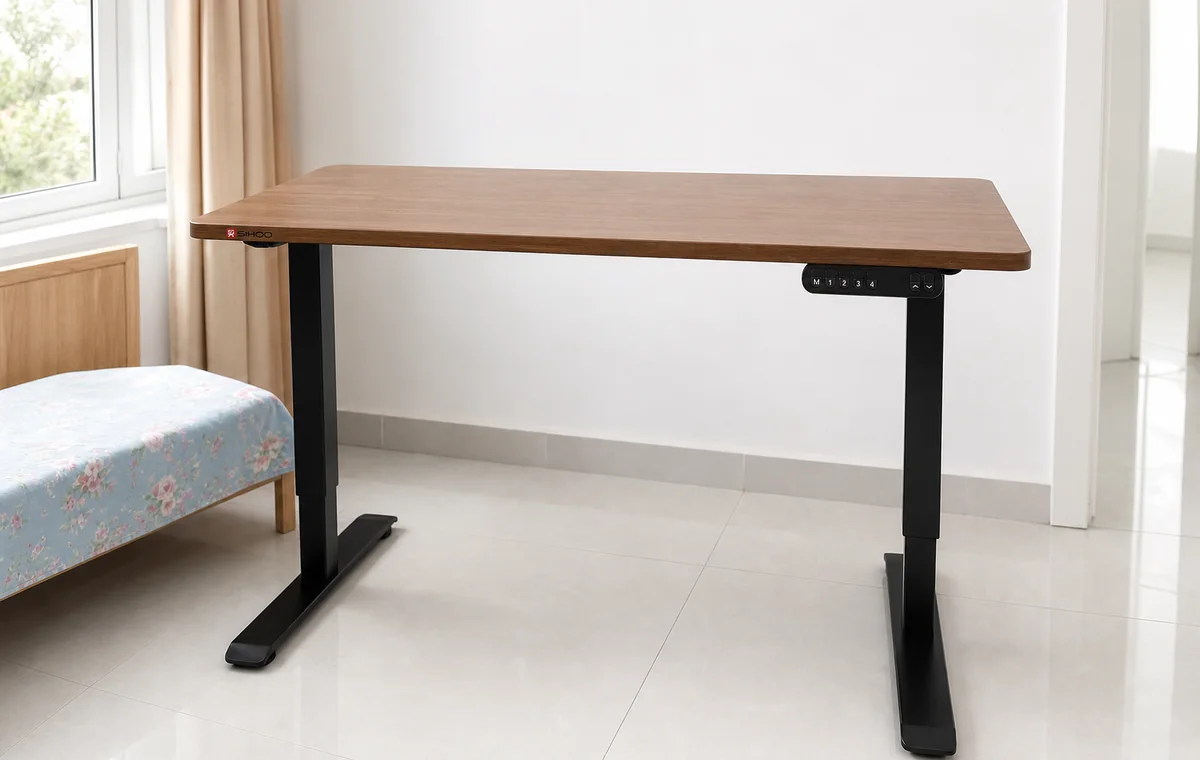
Short answer: this SIHOO standing desk has aged well in my home setup. The walnut-look top still looks clean, the lift controls still feel quick, and the frame has not given me a reason to worry. The weak spot is underneath: cable management feels more DIY than finished, and the long power lead can get messy fast if you do not plan for it.
Why this desk still feels worth keeping
What I like most is not one flashy feature. It is that the desk still feels normal in the best possible way. Some standing desks are fun for a week and then start bothering you. The top starts looking cheap, the frame develops a little wobble, or the controls become something you avoid using. That has not happened here.
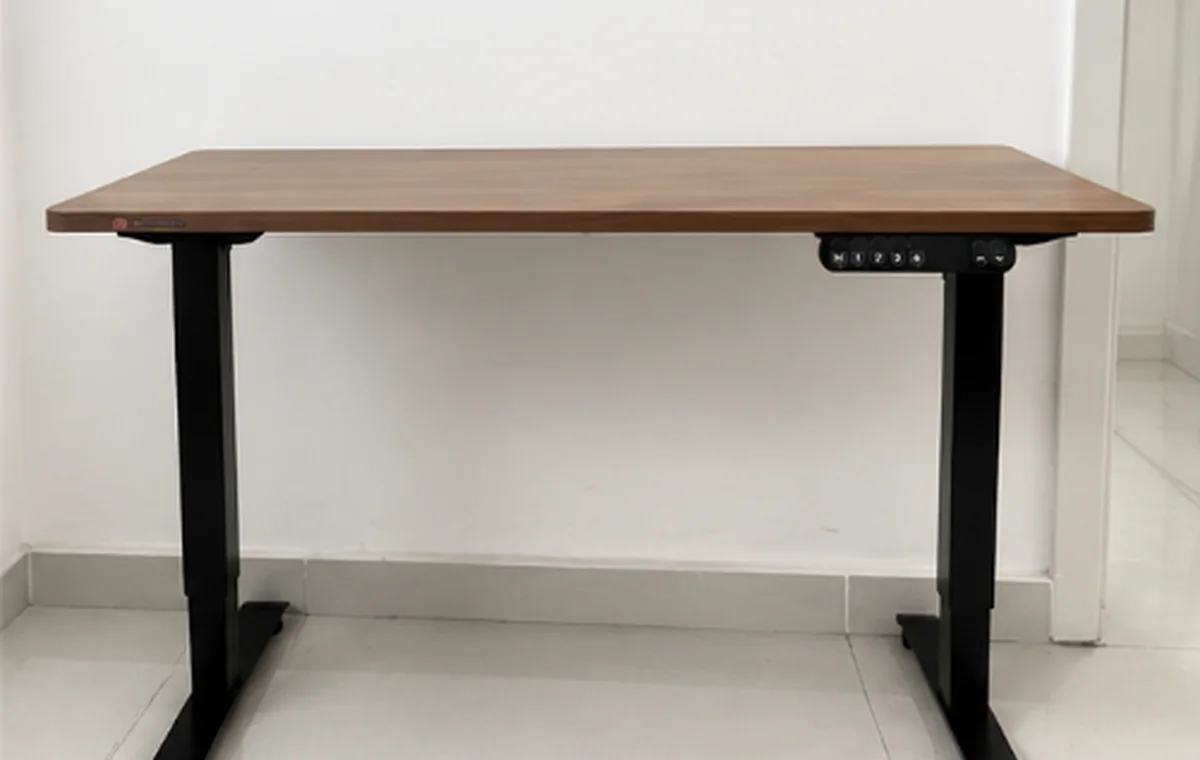
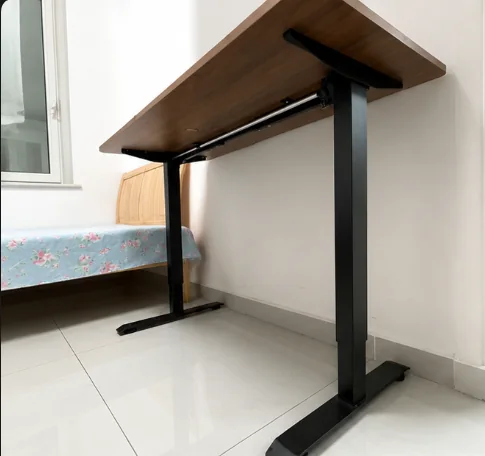
The walnut finish is still the first thing I notice. It softens the whole setup and looks better in a home room than a plain office-style slab. After about two years, the visible surface still looks clean in my use and the rounded front edge has held up better than I expected.
The frame deserves some credit too. It is simple, but it feels steady enough that I stop thinking about it. For a desk like this, that is exactly what I want.
What I can and cannot claim from my own use
| Area | My first-hand note | Limit |
|---|---|---|
| Ownership time | About two years | I am not publishing a receipt because it contains private order information |
| Desktop condition | No visible peeling in my use | I did not perform scratch, water, heat, or abrasion testing |
| Lift behavior | The height adjustment feels sensitive and responsive | I did not measure lift speed, noise level, or load capacity |
| Frame feel | The support frame feels strong and steady for normal home use | I did not run a wobble test with measured force or a loaded weight test |
| Cable management | The long power cable is awkward without a well-sized organizer | The best fix depends on room layout, outlet location, and accessories |
The lift controls are the daily-use win
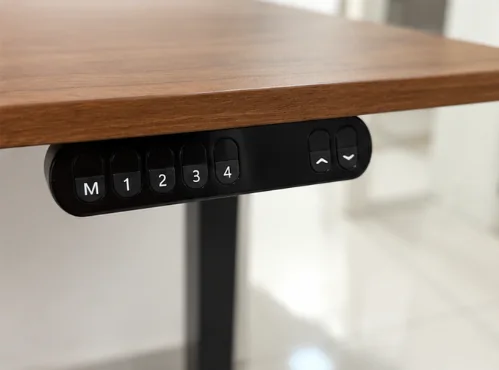
The control panel under the front edge is easy to reach, and the response feels quick. That sounds minor until you use a sit-stand desk regularly. If the controls feel laggy or uncertain, you stop adjusting the desk and it slowly becomes a normal fixed-height table.
On my desk, the buttons feel sensitive enough that moving between sitting and standing does not become a chore. The numbered memory buttons are also useful because a good standing height is not something I want to guess every time. I still recommend checking your own sitting and standing posture rather than copying someone else's numbers, but the memory panel makes repeated adjustments easier once you find settings that work.
I am careful not to turn that into a measured performance claim. I did not time the motor, record decibels, or test the desk under maximum load. My claim is narrower: in ordinary ownership, the lift behavior has stayed pleasant enough that I still use the height adjustment.
The walnut desktop is the strongest visual reason to buy it
The desktop is the part you see and touch every day, so its finish matters more than the marketing spec sheet might suggest. This SIHOO's walnut-look top is the reason the desk feels at home in a bedroom or small apartment. It looks warmer and more finished than a plain utility desk.
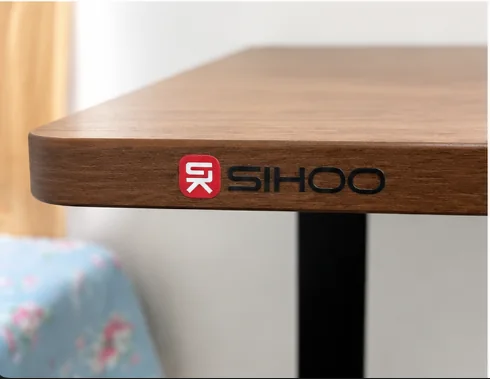
More importantly, the finish has held up in my use. I have not seen peeling on the desktop surface, and the rounded front edge still looks tidy in the photos. That does not mean the desk is immune to damage. I would still use a coaster for drinks, avoid hot objects directly on the surface, and be careful with sharp metal tools. But after two years, I do not feel like the top was a short-life cosmetic layer.
The real drawback is underneath
My main complaint is cable management. The power cable is long, which is helpful if your outlet is far away, but annoying if you want a clean underside. There is not enough built-in organization to make the extra length disappear on its own.
A separate cable tray or adhesive organizer can help, but the fit has to be right. If the organizer is too short, mounted in the wrong place, or asked to hold too much cable tension, it can fail or break. That turns a small annoyance into a repeated maintenance problem. For a desk that otherwise feels well-built, I wish SIHOO had included a more generous, more durable cable routing solution under the desktop.
This issue matters more for people who raise and lower the desk often. Anything plugged into the desktop setup needs enough slack for the highest position, but not so much slack that it hangs visibly at sitting height. Before buying any standing desk, I would plan the cable route, power strip location, and monitor/laptop cable slack at the same time.
Who this SIHOO desk makes sense for
- You want a warm-looking walnut desktop instead of a plain office-style surface.
- You care about a sturdy black frame and simple height controls more than smart features.
- You will use it in a bedroom, study corner, or small home office where appearance matters.
- You are willing to spend a little time making the cable route tidy underneath.
Who should probably skip it
- You want built-in cable management that looks finished without extra accessories.
- You need a verified model-specific weight rating, height range, or desktop size before buying.
- You plan to mount several heavy monitors and accessories without checking the exact SIHOO model specs.
- You dislike visible power cords and do not want to install a cable tray, clips, or sleeve.
Buying checklist before choosing a SIHOO desk
| Check before buying | Why it matters |
|---|---|
| Exact model number | SIHOO products can vary by region and generation; do not assume every desk has the same frame, motor, size, or controls. |
| Desktop size | Measure your chair, monitor depth, keyboard position, and room walkway before choosing a top. |
| Height range | Your sitting and standing elbow height should fit inside the desk's adjustment range. |
| Load needs | Count monitors, arms, speakers, laptop stands, and other accessories before trusting a vague "sturdy" impression. |
| Cable route | Plan outlet position, power-strip mounting, and slack for the highest desk position before the first day. |
Final verdict
After about two years, my SIHOO standing desk feels like a good long-term buy for a home workspace. The walnut desktop still looks good, the lift controls feel responsive, and the support frame feels solid for normal use. Those are the parts that matter most because they affect the desk every day, not just during setup.
The cable situation is where the product feels less thought-through. If SIHOO had done more under the desktop, the whole thing would feel more complete. Even so, I would still recommend this kind of SIHOO desk to someone who wants a good-looking height-adjustable desk for home use, as long as they expect to spend a little time sorting out the underside.
Sources and method
This review is based primarily on my own SIHOO desk, about two years of ownership, and the original photos shown on this page. Because the exact model number was not available from the supplied evidence, I did not publish model-specific SIHOO specifications, pricing, load ratings, or height range. For setup ergonomics, readers should also review neutral workstation guidance and measure their own seated and standing positions.