Quick answer
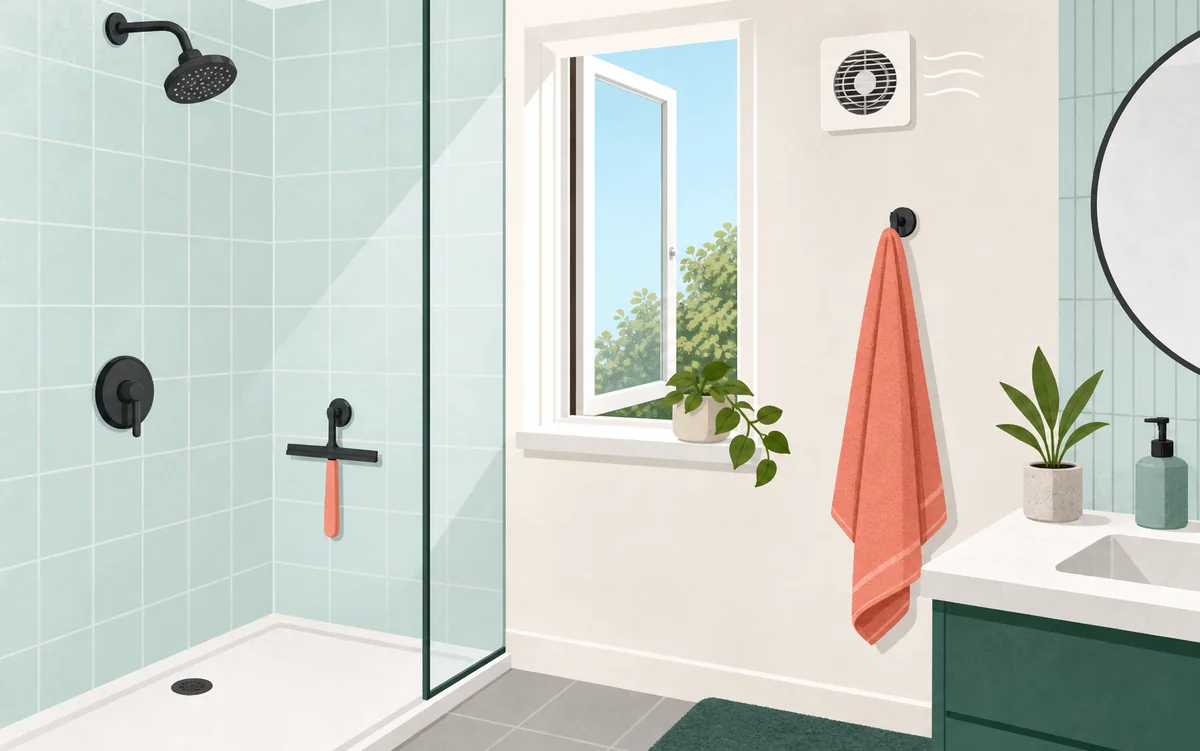
Run an exhaust fan that vents outdoors or open a suitable window during showering, keep ventilation going afterward, remove standing water and let towels dry with space around them. Report persistent dampness, leaks, damaged finishes or recurring mold in writing because cleaning alone cannot fix a building moisture source.
This guide is general U.S.-focused information, not legal or medical advice. Rental duties vary by location and lease. No first-hand property inspection was supplied.
Why condensation appears
Warm humid air releases moisture when it meets a cooler surface. Mirrors, exterior walls, pipes and ceilings can therefore become wet even without a plumbing leak. Frequent condensation can also signal inadequate ventilation, cold surfaces or unusually high indoor humidity.
EPA says moisture control is the key to mold control. It recommends indoor relative humidity below 60%, ideally 30–50% where practical. CDC advises keeping humidity no higher than 50% if possible and using bathroom exhaust fans that vent outdoors.
A practical after-shower sequence
- Run the exhaust fan or use an appropriate window during the shower.
- Keep the bathroom door positioned according to the ventilation design and safety needs.
- Remove water from shower walls or doors with a squeegee where suitable.
- Spread towels so air reaches both sides.
- Leave the fan running long enough for visible moisture to clear.
- Record persistent condensation rather than repeatedly painting over it.
Do not assume a noisy fan moves enough air or vents outdoors. Renters should not dismantle electrical equipment; report suspected defects.
Use humidity readings carefully
An inexpensive hygrometer can reveal patterns, but one reading does not diagnose a building. Place it away from direct spray and compare before-shower, peak and recovery readings over several ordinary days.
EPA notes that humidity meters can help and that condensation itself is a warning to dry the surface and reduce the moisture source. Avoid presenting a consumer sensor as laboratory evidence.
Cleaning versus fixing
Small mold growth on a hard surface may be cleanable using current CDC or EPA instructions and the product label. CDC warns never to mix bleach with ammonia or other cleaners. Ventilate and use appropriate gloves and eye protection.
Porous damaged materials, recurring growth, large areas, sewage, flooding or health vulnerabilities call for more caution. CDC says mold type testing is generally unnecessary; visible or smelled mold means moisture and cleanup need attention.
What renters should document
- Dated photos of condensation, stains, peeling paint or growth.
- Humidity pattern and weather, without claiming laboratory accuracy.
- When the fan was used and whether airflow appears weak.
- Leak sounds, plumbing drips or water entering from another unit.
- Written notices and maintenance responses.
Use the lease and local housing authority for location-specific duties. Do not withhold rent or make structural repairs based on a general web article.
Signs the routine is not enough
| Sign | Next step |
|---|---|
| Moisture clears promptly | Continue ventilation and monitoring |
| Condensation remains for hours | Document and report ventilation concern |
| Peeling paint or soft drywall | Report possible material damage |
| Musty odor or recurring growth | Report moisture source and seek proper cleanup |
| Active leak | Notify responsible party promptly |
| Breathing symptoms | Seek qualified medical advice |
Products worth considering
A simple squeegee and hygrometer can support observation. A dehumidifier may help some homes, but it adds purchase cost, noise, energy use, drainage and cleaning. It should not be used to conceal an unrepaired leak or failed exhaust system.
Final recommendation
Manage ordinary shower moisture with ventilation, surface drying and towel airflow. Escalate patterns that suggest a failed fan, leak or damaged material. The goal is not to make the tenant responsible for a structural problem; it is to reduce avoidable moisture while creating clear evidence when maintenance is needed.