Quick recommendation
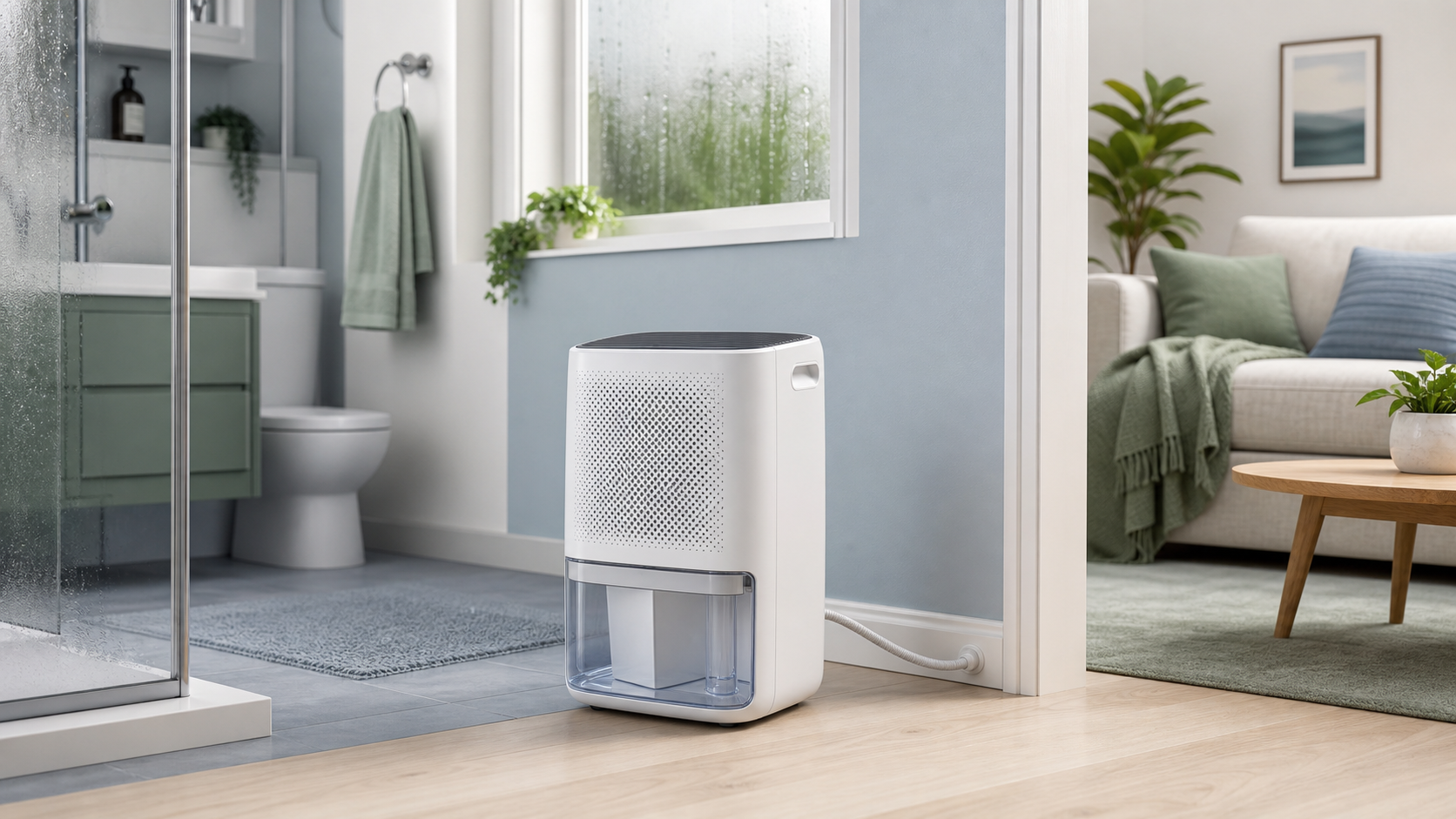
For most apartments, choose a portable ENERGY STAR-certified unit by the actual dampness, not by floor area alone. Confirm where the water will go, whether the unit can restart after a power interruption, how loud it is at the setting you will use, and whether warm exhaust air is acceptable in the room.
A dehumidifier is a moisture-management appliance, not a repair. Report leaks, failed bathroom ventilation, wet drywall, recurring mold and exterior water intrusion instead of using a machine to hide them.
No dehumidifier was supplied for hands-on testing. This guide is based on current EPA, CDC and ENERGY STAR documentation reviewed July 5, 2026.
Start with the moisture problem
Use an inexpensive hygrometer to observe patterns over several ordinary days. EPA recommends indoor relative humidity below 60%, ideally between 30% and 50% when practical. CDC advises keeping humidity no higher than 50% if possible. These are broad moisture-control targets, not a requirement to force every room to one exact number.
Ask where the moisture comes from. Showering, indoor laundry drying and seasonal humidity may be manageable with ventilation and dehumidification. Plumbing leaks, rain entry and damaged building materials need repair.
Capacity: why square footage is not enough
Dehumidifier capacity is stated in pints of water removed per 24 hours under specified test conditions. ENERGY STAR says the required capacity depends on both the space and its condition before dehumidification.
| Condition without dehumidification | ENERGY STAR guidance for a space under 2,000 sq. ft. |
|---|---|
| Slightly to moderately damp, intermittent musty odor, roughly 50–75% RH | 20–30 pints/day |
| Very damp, consistent odor or damp spots, roughly 75–90% RH | 25–40 pints/day |
| Wet surfaces, seepage or heavy laundry load, roughly 90–100% RH | 30–50 pints/day |
An apartment may be much smaller than 2,000 square feet, but a wet room can still impose a high moisture load. Treat the chart as a minimum-capacity estimate and compare it with the manufacturer’s tested rating.
Do not compare old and new pint ratings directly
DOE test conditions changed, and ENERGY STAR explains that products rated under the newer procedure can show a lower pint number than apparently similar older models. For example, an older 50-pint rating roughly corresponds to a newer 30-pint class in ENERGY STAR’s comparison table.
When replacing a machine, compare the current DOE-rated capacity and Integrated Energy Factor rather than assuming that the largest printed number is better.
Drainage is the first apartment constraint
Bucket
A bucket works without plumbing changes, but the machine stops when it fills. Check bucket size, carrying grip, spill control and whether a full indicator is visible. A larger-capacity unit with a small bucket may require frequent emptying in a damp room.
Gravity hose
Continuous gravity drainage requires a drain lower than the outlet and a hose route with a steady downward slope. A bathtub edge may be too high. Avoid creating a trip hazard or leaving a loose hose where it can flood another unit.
Built-in pump
A pump can move water upward to a sink or other approved drain. It adds cost, noise and another component that can fail. Verify lift height, included hose and warranty. Renters should not make permanent plumbing changes without permission.
Noise and heat matter more in small rooms
Refrigerant dehumidifiers use a compressor and fan. Their exhaust air is normally warmer than the incoming air, which can be useful in a cool basement and uncomfortable in a bedroom during summer.
Compare sound ratings at low and high fan settings, but remember that manufacturer measurements may use different methods and distances. A timer, sleep mode or placement outside the sleeping area may matter more than a small headline difference.
Do not block the inlet or outlet. Follow the manual’s wall clearances; pushing a unit tightly behind furniture can reduce airflow.
Energy and operating cost
ENERGY STAR’s current specification uses Integrated Energy Factor, expressed as liters of water removed per kilowatt-hour. A higher IEF means more moisture removal for the energy consumed under the test procedure.
Estimate cost with the unit’s wattage, expected hours and local electricity price. The compressor will cycle, so a simple nameplate calculation is an upper-bound estimate rather than a guaranteed bill.
Features worth paying for
- Accurate adjustable humidistat
- Automatic shutoff with a full bucket
- Easy-to-clean filter and accessible intake
- Automatic defrost for cooler rooms
- Restart behavior documented in the manual
- Hose connection or pump suited to the apartment
- Wheels and a handle that work with the unit’s weight
- Current safety certification and recall status
- A clear warranty and available replacement parts
Wi-Fi control is optional. It adds an account, app permissions and long-term software dependency without improving basic water removal.
Who should skip a dehumidifier
Skip the purchase until the source is investigated if there is an active leak, standing water, wet drywall, sewage, spreading mold or a failed building exhaust system. A dehumidifier also makes little sense when humidity is already in a reasonable range and the problem is only a cold mirror after a short shower.
Apartment setup checklist
- Measure humidity patterns and note the moisture source.
- Confirm the landlord’s responsibilities and report building defects.
- Select capacity from both dampness and space.
- Plan bucket emptying or an approved drain route.
- Check clearance, outlet location and circuit guidance.
- Estimate noise and heat impact in the intended room.
- Register the warranty and check recalls.
- Clean the filter and bucket on the manual’s schedule.
Final verdict
For a small apartment, a correctly drained 20–30 pint/day model is a reasonable starting class for moderate dampness, while very damp conditions may justify more capacity. The better purchase is not automatically the biggest unit; it is the one that can run safely, drain reliably and maintain a useful humidity range without becoming too noisy or inconvenient to use.
Sources and methodology
- ENERGY STAR dehumidifier buying guidance
- ENERGY STAR dehumidifier testing and capacity
- ENERGY STAR efficiency criteria
- EPA mold, moisture and humidity guidance
- CDC mold prevention guidance
GameFunns did not test a dehumidifier or inspect a property for this guide. Product specifications, local electrical requirements and rental responsibilities should be confirmed before purchase.