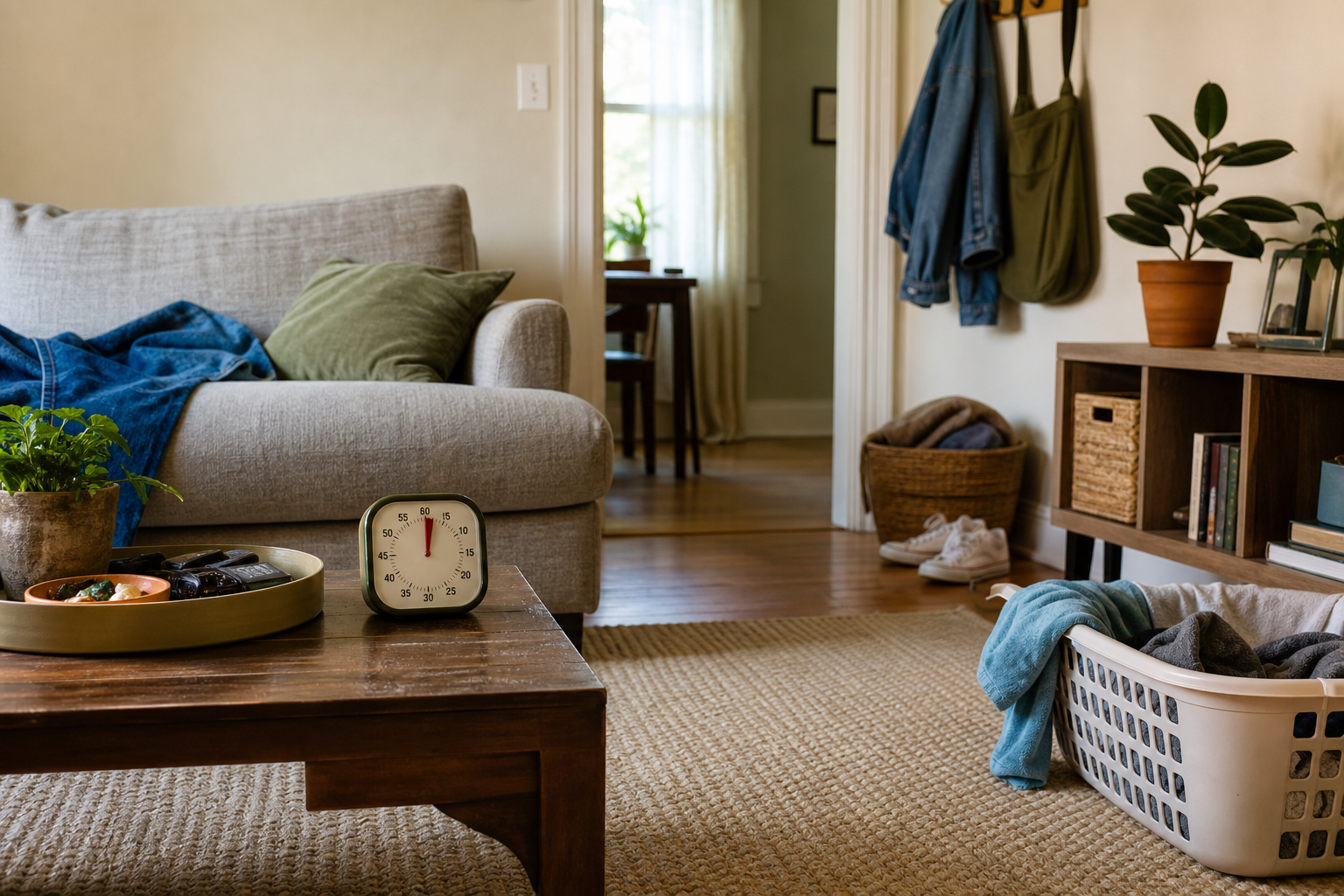
What this routine is for
This reset returns a home to a usable baseline: dishes contained, trash gathered, laundry off the floor, walking paths clear and essential surfaces available. It is not deep cleaning, mold remediation, pest control or a substitute for repairs.
The original article described a personal Friday habit, but no logs or first-hand evidence were supplied. This version presents the sequence as an optional framework. CDC guidance informs the cleaning distinctions; the 20-minute timing itself is an editorial choice.
Before starting
Use products appropriate for each surface and follow their labels. Never mix cleaning chemicals. Ventilate as directed, keep products away from children and pets, and use protective equipment required by the label.
Gather one basket, a trash bag, a laundry hamper and one suitable cloth. Avoid carrying an open bucket through a cluttered room.
Minute 0–4: remove obstacles
Collect trash, dishes and laundry first. Put misplaced objects into one basket without reorganizing drawers. Clear walking routes and exits before working on appearance.
If you find broken glass, bodily fluids, pests, major water damage or an electrical hazard, stop and use the appropriate specialized procedure or professional help.
Minute 4–9: restore the kitchen
Put food away, contain dishes and clear one preparation surface. Wipe visible spills using a product suitable for the material. A pan can soak; the purpose is to make the sink and counter functional.
CDC distinguishes cleaning from disinfection. Cleaning with soap or detergent removes dirt and many germs. Disinfection is more appropriate for specific higher-risk situations, such as illness, and products must remain wet for the labeled contact time.
Minute 9–13: reset bathroom and laundry
Hang towels so they can dry, place laundry in the hamper, remove trash and wipe a visibly dirty sink area. Persistent condensation, leaks or mold growth require moisture control rather than repeated cosmetic wiping.
Do not combine bleach with ammonia or other cleaners. Follow the product label and current public-health guidance.
Minute 13–17: return the basket
Move room by room and return objects that already have a defined home. Put objects without a home into one small decision tray. Do not create a second tray during the reset.
This is where the organization system is tested. If the same object repeatedly wanders, its assigned home may be too difficult to access.
Minute 17–20: high-value finish
Address the few frequently touched or visibly dirty surfaces that matter most, such as a counter, handle or desk area. CDC notes that high-touch surfaces often deserve more frequent attention than low-touch surfaces. In ordinary homes, broad disinfectant spraying is usually unnecessary.
Stop at 20 minutes. Record larger tasks—vacuuming, oven cleaning, repairs or decluttering—for a separate session.
Priority order for a difficult week
| Priority | Reason |
|---|---|
| Hazards and clear exits | Safety comes first |
| Food and dishes | Prevents odors and restores function |
| Trash | Removes obvious waste |
| Laundry and towels | Clears floors and supports drying |
| One work surface | Makes the next task possible |
| Decorative straightening | Optional |
When this routine is not enough
Use a different plan for illness cleanup, infestations, large mold areas, flooding, sewage, hoarding-related safety issues or inaccessible exits. A timed reset should never hide a building or health problem.
Final recommendation
Use the reset to restore function, not to prove that the home is perfect. Clear hazards, contain food and waste, return common objects and stop on time. A separate task list protects the routine from expanding into an exhausting project.