Short answer: the Marshall Stanmore III is a good fit if you want a home speaker with a strong look, a sound that suits rock and pop, and a simple mix of Bluetooth plus wired input. The annoying part is not the sound. It is the overlooked buying details: this is an AC-powered home speaker, plug types vary by region, and Marshall does not include a 3.5 mm or RCA cable in the box.
Why this Marshall works for the right listener
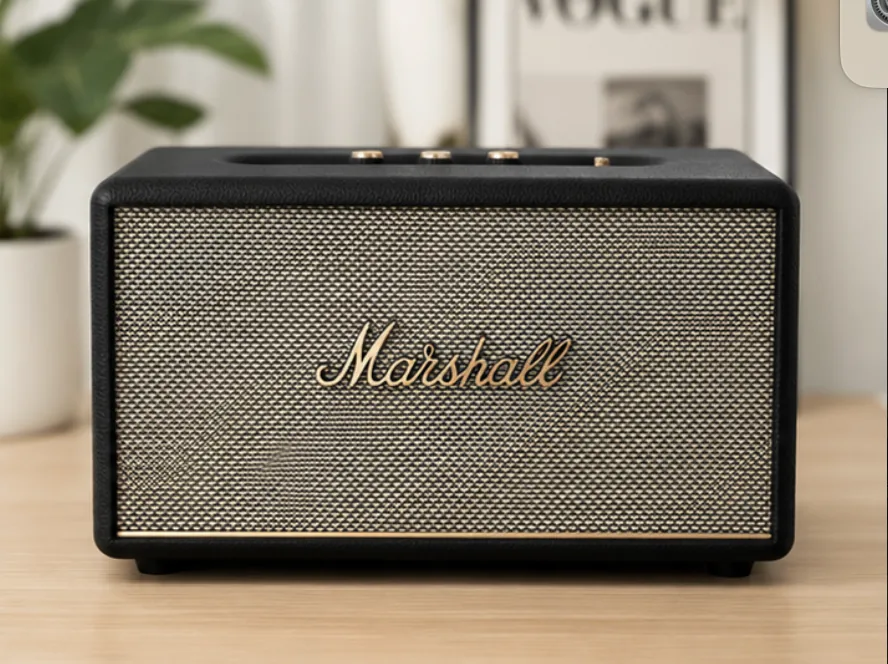
The Stanmore III makes the most sense for someone who wants a home speaker with a strong personality, not just a neutral black box that disappears into a room. Marshall leans hard into that identity, but in this case the product is not style-only. The official spec sheet backs it with a real home-speaker footprint, stereo playback, a bass-reflex cabinet, one 50 W Class D amplifier for the woofer, and two 15 W Class D amplifiers for the tweeters.
My own listening note is much simpler than Marshall's branding story: this speaker is at its best with rock and pop. If that is what you play most often, the Stanmore III makes sense very quickly. It is more about energy and enjoyment than hyper-analytical detail.
The other everyday win is convenience. Bluetooth is the easy default, but wired playback is still there when you want it. Some home speakers quietly push you into a single workflow. This one does not.
Specs that matter before you buy
| Feature | Marshall Stanmore III | Why it matters |
|---|---|---|
| Official US price | $399.99 on Marshall's US site on July 11, 2026 | Useful baseline, but buyers should recheck current price before publishing or buying |
| Wireless | Bluetooth 5.2, ready for Bluetooth LE Audio | Modern wireless connection for everyday phone and laptop use |
| Wired inputs | 3.5 mm input and RCA input | Lets you connect older or fixed-location devices without relying only on Bluetooth |
| Bluetooth range | 10 m / 30 ft, according to Marshall | Relevant if you move around the room with your phone |
| Amplification | One 50 W amp for woofer, two 15 W amps for tweeters | Shows this is a true AC-powered home speaker, not a tiny portable unit |
| Frequency range | 45-20,000 Hz | Useful spec reference, though not a substitute for real listening taste |
| Max sound pressure | 97 dB @ 1 m | Official loudness reference for room listening |
| Size and weight | 350 x 203 x 188 mm; 4.25 kg | Important for shelf space, desk use, and realistic expectations about portability |
| Water resistance | No | A clear reason not to treat it like an outdoor or travel speaker |
What I genuinely like about living with it
The first thing I would keep from this speaker is the genre match. Some speakers are easy to respect but not especially fun. My own note on the Stanmore III is the opposite: rock and pop suit it very naturally. If your listening habits overlap with that, this is the kind of positive that matters more than abstract spec comparisons.
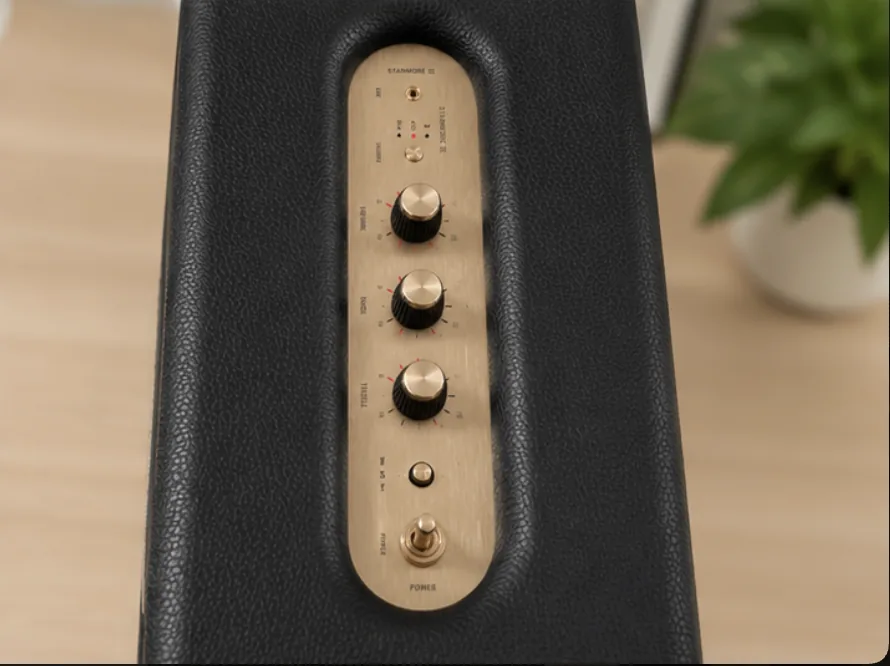
The second thing is that Marshall did not overcomplicate daily control. The top panel gives you physical knobs for volume, bass, and treble, plus a source button and playback controls. Officially, you can also use the Marshall Bluetooth app for extra settings and over-the-air updates, but the speaker does not force the app between you and basic listening.
That balance is part of why the Stanmore III feels practical. It has enough modern convenience to fit current habits, while still behaving like a speaker you can walk over to and control directly.
The convenience story is good, but the box is less generous than you might expect
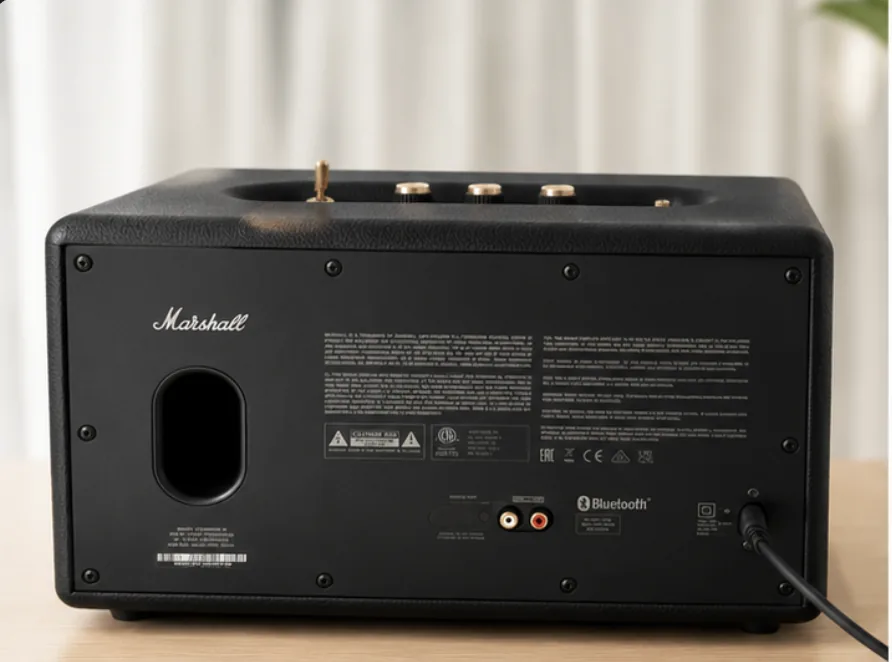
This is one of the most useful things a buyer should know before checkout: Marshall's official box contents for the Stanmore III are just the speaker, the user manual and legal/safety information, and the mains lead. That means the brand does not include a 3.5 mm cable or an RCA cable in the box.
That lines up with my own buying warning. If wired playback is part of why you want this speaker, plan that extra purchase from the start. It is not a huge expense, but it is still part of the real total cost. A review that ignores that detail makes the buying experience sound smoother than it actually is.
The other practical warning is regional hardware. Plug types vary by market, and Marshall clearly runs country-specific storefront versions of this product. Buyers should make sure they are ordering the correct regional version rather than assuming every Stanmore III package is identical worldwide.
Marshall Stanmore III buyer checklist
| Check before buying | Why it matters |
|---|---|
| Your usual music | If you mainly play rock and pop, this speaker's character makes more sense than if you want a purely neutral monitor-style sound. |
| Room placement | At 350 x 203 x 188 mm and 4.25 kg, it needs real shelf or desk space and AC power nearby. |
| Region and plug type | Country versions differ, so confirm the local plug and store region before ordering. |
| Wired listening plan | The box includes the mains lead, but not a 3.5 mm or RCA audio cable. |
| Use case | This is a home speaker with no water resistance, not a battery speaker for outdoor or travel use. |
Who should buy it
- You want a home speaker with a strong visual identity instead of an anonymous plain-box design.
- You listen to a lot of rock and pop and want a speaker that feels enjoyable rather than clinical.
- You like having both Bluetooth and direct wired input available.
- You value physical controls on the speaker itself instead of relying only on an app.
Who should skip it
- You need a portable battery speaker for travel, outdoor use, or moving between rooms constantly.
- You want water resistance or rough-use flexibility.
- You expect every cable needed for wired playback to be included in the box.
- You are buying from another region and are not willing to double-check plug compatibility first.
What the trade-offs really are
The Stanmore III is easy to recommend only when the buyer understands what it is. It is a mains-powered home speaker with a retro-styled cabinet, physical controls, Bluetooth 5.2, and two wired input options. That package is appealing precisely because it is not trying to be an all-purpose portable speaker.
The trade-off is that it is easy for buyers to fill in the blanks a little too generously. "Bluetooth plus wired" sounds like everything is included. A familiar brand makes people assume accessories are the same everywhere. A speaker this size can look more flexible than it really is. Those are the spots where I think a review should slow down and be plain.
If you go in with the right expectations, the compromises are manageable. If you go in expecting a portable all-in-one package, the same details can become annoyances very quickly.
Final verdict
The Marshall Stanmore III is a good fit for someone who wants a stylish home speaker that sounds especially satisfying with rock and pop, keeps Bluetooth simple, and still gives you direct wired input when you want it. The appeal is not just the logo. The combination of physical controls, AC-powered output, and flexible input options gives it a clear role in a home setup.
I would still tell buyers to stop for a minute before ordering and check the boring details: plug region, shelf space, and whether they also need to buy a 3.5 mm or RCA cable. None of that ruins the product, but it does change the buying experience. For the right room and the right listener, the Stanmore III is easy to enjoy. For someone who wants portability or an all-included wired setup, it is easier to admire than to recommend.
Sources and method
This review uses my own ownership notes and my own photos of the speaker, plus official Marshall product information checked on July 11, 2026. I did not perform lab testing for loudness, latency, distortion, or frequency response. Published facts such as price, connectivity, dimensions, weight, box contents, and amplifier layout come from Marshall's official Stanmore III product page and manual link.