Short answer: the best commuting headphones are the ones you will wear comfortably at realistic volume. Strong ANC matters, but heat, fit, battery, controls, and a backup audio path can matter more after the first week.
Commute headphones have a different job
A quiet-room demo tells you very little about train noise, bus engines, street traffic, and walking between platforms. Commuting headphones must handle changing environments without making you fiddle with the app every five minutes. They also need to be comfortable when the weather is warm and your bag is already full.
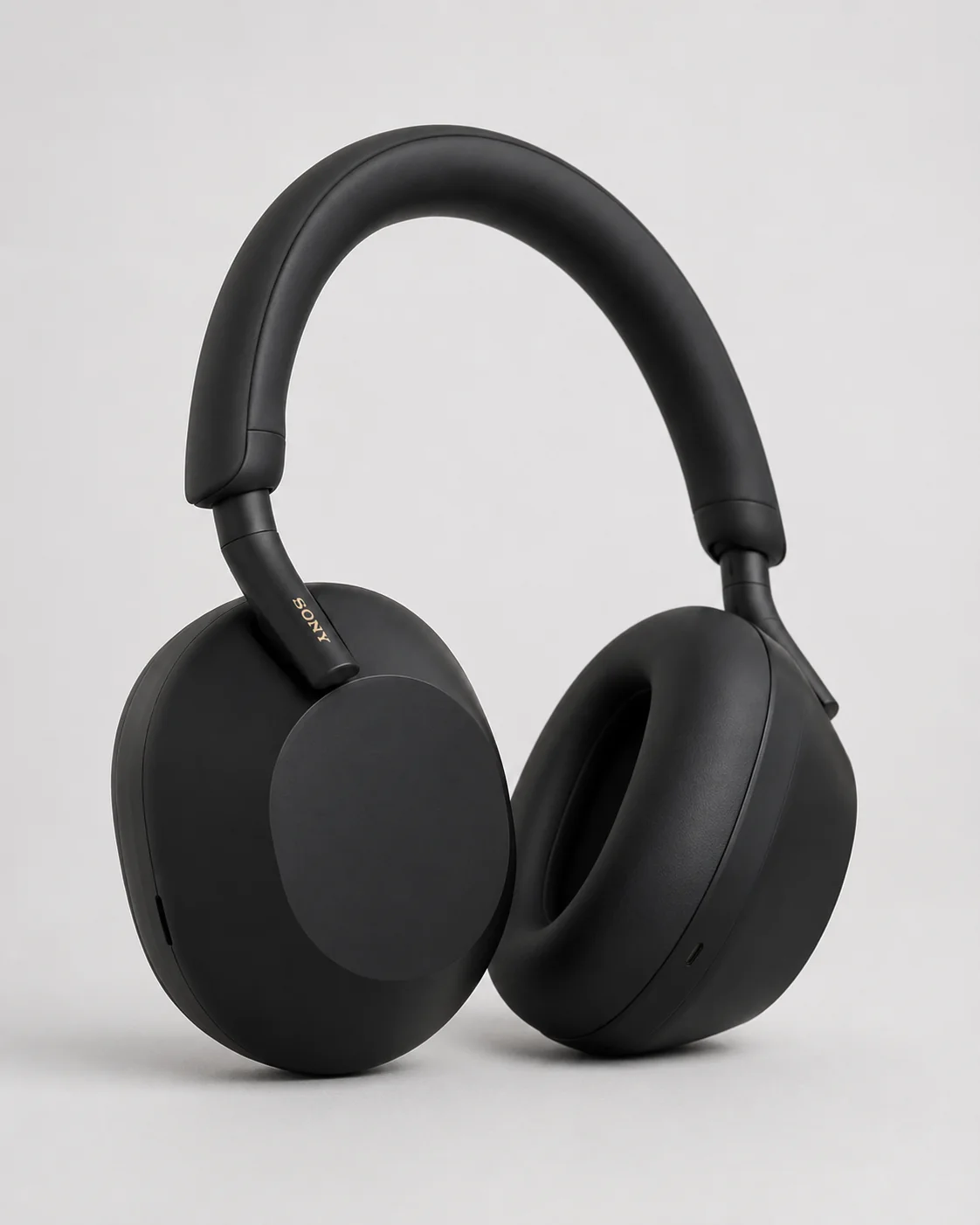
The Sony WH-1000XM5 is a useful example because Sony lists a 30-hour battery life with noise cancelling on, about 250 g weight, USB-C charging, LDAC support, and a 3.5 mm wired input. Those facts are not the whole decision, but they show the categories worth checking on any model.
The five commute checks
| Check | Why it matters | What to look for |
|---|---|---|
| Comfort after 60 minutes | Soft pads can still trap heat | Return window, pad shape, clamp, weight |
| ANC behavior | Transit noise is low and repetitive | Stable reduction without pressure discomfort |
| Controls | You may be walking or standing | Easy volume, pause, transparency, and calls |
| Battery with ANC on | Marketing numbers vary by mode | Published battery with ANC enabled |
| Backup path | Travel days are messy | 3.5 mm input or reliable quick charging |
Over-ear, on-ear, or in-ear for transit
Form factor decides more of the commute experience than most spec sheets admit. Over-ear models like the WH-1000XM5 give the strongest combination of passive and active isolation and the best battery, but they are the warmest and the bulkiest to carry once they come off your head. On-ear headphones are lighter and cooler, yet they press directly on the ear and usually seal less against low rumble. In-ear noise-cancelling buds disappear into a pocket and stay cool in summer, at the cost of shorter battery per charge and a fit that depends entirely on choosing the right ear tips. If your commute is short and hot, buds often win; if it is long and cold, over-ear comfort and battery usually win.
Do not ignore heat
Closed over-ear ANC headphones create a seal. That seal helps reduce noise, but it can also trap warmth. If you commute in summer or wear glasses, comfort may be the deal-breaker. Try to judge comfort after a real walk or a full train ride, not only after a five-minute store demo.
Battery numbers need context
Battery life should be checked with noise cancelling enabled because that is how most commuters use ANC headphones. A model that lasts several workdays between charges is easier to trust. Fast charging is useful, but it should be a rescue feature rather than the whole plan.
Pairing, multipoint, and quick charge in practice
A commute often means switching between a phone for music and a laptop for the last leg of a journey. Bluetooth multipoint, which keeps two devices connected at once, removes the repeated re-pairing that makes a headphone tiring to live with. Quick charging earns its place here too: a model that gives several hours of playback from a few minutes on the cable can rescue a morning you forgot to charge. Neither feature replaces a strong headline battery figure, but both are the kind of small detail that decides whether you keep reaching for the headphones after the first month.
Safe listening is part of the purchase
ANC can help because you may not need to raise volume as much in noisy places. It is not a license to listen loudly all day. The more often you commute, the more valuable it is to use moderate volume, take breaks, and choose a headphone that reduces background noise without encouraging loud playback.
Awareness matters on platforms and crossings
Strong noise cancelling is a safety tradeoff as well as a comfort feature. On a train seat it is exactly what you want; at a road crossing or a busy platform edge it can remove cues you rely on. The practical habit is to learn the one-touch transparency or ambient control on your headphone so you can let outside sound back in without pulling the headphones off or opening an app. Treat that button as part of the purchase: if a model buries ambient mode two menus deep, it is a worse commute headphone even when its ANC is excellent.
Final verdict
Buy commute headphones for the route you actually take. Prioritize steady ANC, comfort after an hour, battery life with ANC on, simple controls, and a backup plan. A headphone with slightly less hype but better comfort can be the better commute product.