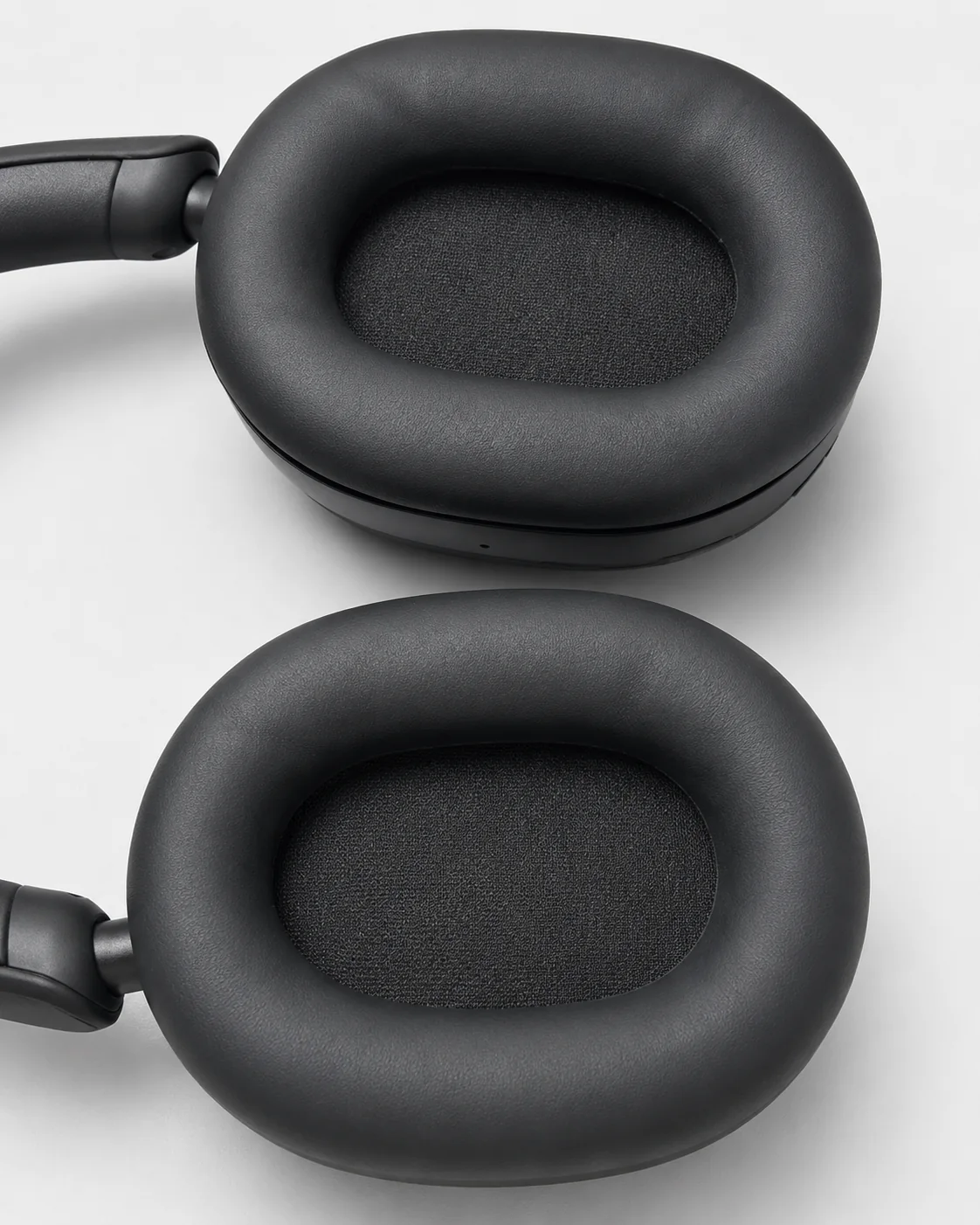
Short answer: over-ear headphones feel warm because the pads seal around your ears. That seal helps isolation and noise cancelling, but it also reduces airflow and traps body heat. The fix is not always a different brand; sometimes it is a different headphone type.
The seal is doing two jobs
Closed over-ear headphones are designed to surround the ear and reduce outside sound. Noise-cancelling models benefit from a steady acoustic seal because it makes the electronics' job easier. The comfort tradeoff is physical: less air exchange around the ear.
Soft pads can make the first few minutes feel excellent, then become warm after longer listening. That is why a store demo is a weak comfort test. Heat shows up after time, especially on a commute or during a long desk session.
What makes warmth worse
- Warm rooms or summer travel: the pad has less cool air to work with.
- Glasses: arms can change the pad seal and pressure pattern.
- High clamping force: better isolation can mean more pressure.
- Leather-like pads: easy to clean, but often less breathable than fabric.
- Long uninterrupted sessions: small discomfort becomes obvious over time.
How the pad material changes the heat
Ear-pad covering is the single biggest comfort variable most buyers ignore, and the three common options behave very differently:
- Protein leather (PU / pleather): the default on most premium ANC headphones, including the Sony WH-1000 series. It seals well for bass and noise cancelling and wipes clean in seconds, but it does not let heat or moisture escape, so it is the warmest choice over long sessions.
- Fabric or velour: common on open-back and studio-style headphones. It breathes far better and stays cooler, but it absorbs sweat and skin oil, is harder to clean, and usually leaks a little more low end because the seal is less airtight.
- Hybrid pads: fabric on the part that touches your skin and protein leather on the outer ring. This is a sensible middle ground, and it is why some replacement pads are sold as "cooling" or "sport" versions.
If a headphone you otherwise like runs hot, a hybrid or fabric replacement pad is the most targeted fix. Just expect a small change in bass and isolation, because you are altering the exact seal the tuning was designed around.
What to try before returning them
Start with fit. Extend the headband enough that the cups surround your ears instead of pressing down on them. Take short breaks during long sessions. If the app offers ANC or ambient adjustments, try a slightly lighter mode when full isolation is not needed. Clean pads gently so oils do not make them feel sticky.
If heat is still the main problem, replacement pads may change the feel, but they can also affect ANC and sound. Treat pad swaps as an experiment, not a guaranteed upgrade.
A wear test that actually predicts comfort
Because heat builds up over time, a two-minute store demo tells you almost nothing. Wear the headphones for at least 30 to 40 continuous minutes in a room at normal temperature, ideally while doing something ordinary like working or commuting rather than sitting still. Note when the first warmth appears, whether it becomes distracting, and whether a short break resets it. Most return windows are long enough to run this test two or three times before deciding.
Do the same test with glasses on if you normally wear them. The arm breaks the pad seal and shifts the pressure pattern, so a headphone that feels fine bare can behave differently over frames.
If it is heat plus sweat
Warmth and trapped moisture are related but not identical. If your real complaint is damp pads rather than temperature, wipe the pads after each session and let them air out. That prevents the sticky feeling that makes the next session feel hotter than it is. Thin breathable pad covers exist, but they slightly change the sound and can trap their own moisture, so treat them as a comfort experiment. For heavy sweat during exercise, an on-ear or in-ear design is usually more practical than any over-ear pad change.
When to choose another type
If your ears get warm with every closed over-ear headphone, an open-back headphone, on-ear model, or earbuds may be better for desk use. Open-back headphones leak sound and do not work well for commuting, but they usually feel airier. Earbuds avoid ear-cup heat but introduce their own fit and comfort issues.
Final verdict
Warm ears are usually a design tradeoff, not proof that a headphone is defective. If you need maximum commute ANC, some heat may be acceptable. If you need all-day comfort at a desk, breathability should outrank the strongest possible noise reduction.
Related reading
See our Sony WH-1000XM5 long-term review for a real example of strong ANC with a clear warmth tradeoff.