Short answer: the Sony SRS-XB100 is a good mini Bluetooth speaker if you want a small body, long battery life, and a bass-forward sound that feels fuller than its size suggests. I would not buy it for crisp mids, bright treble, or maximum loudness. Compared with the JBL GO 4, Sony feels more like the endurance-and-bass choice, while JBL looks stronger if you care more about punch, mid/high clarity, app features, and a louder small-speaker attitude.
Why this little Sony still makes sense
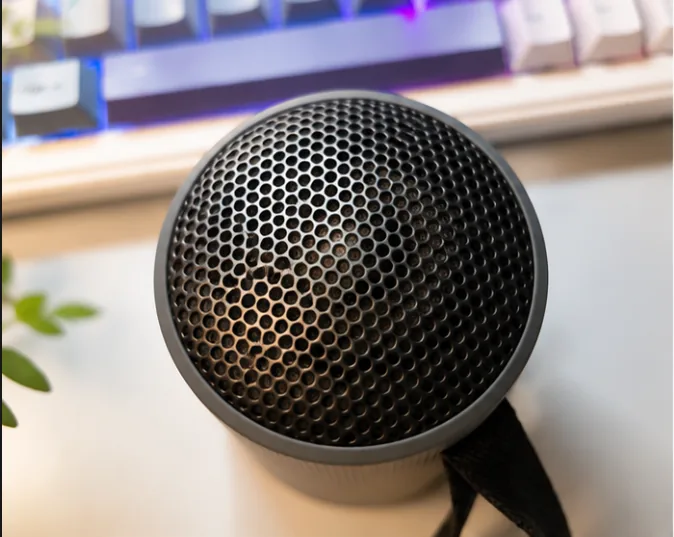
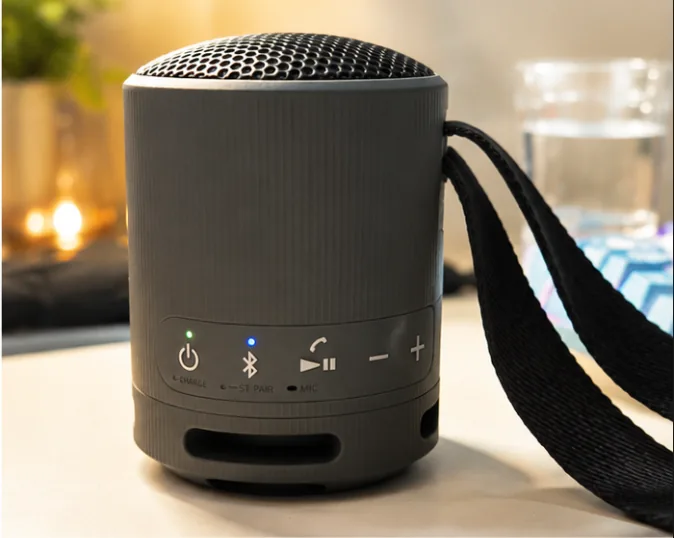
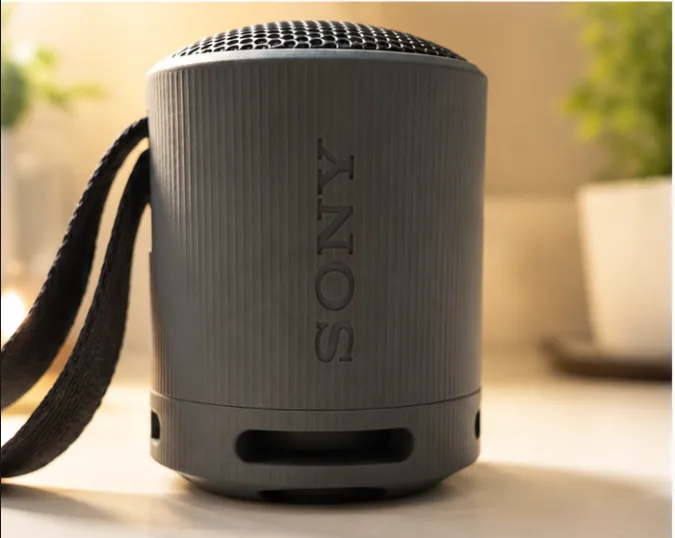
The reason I still use the SRS-XB100 is not complicated: it is easy to bring when a normal Bluetooth speaker feels like too much. For quick outdoor listening, a walk, a small table, or background music away from a desk, the strap and small cylindrical body make it practical.
My favorite part is the bass. For a speaker this small, Sony clearly leans toward low-end weight and a fuller presentation rather than a thin, bright sound. That makes casual music feel more enjoyable outdoors, where weak bass disappears quickly.
The tradeoff is just as clear. The mids and highs are not the reason to buy it. Vocals, acoustic detail, and treble sparkle are acceptable for the size, but they do not feel as forward or as clean as the bass. If you want a tiny speaker that prioritizes vocal bite and upper-range energy, the JBL GO 4 deserves a serious look.
Specs that matter in daily use
| Feature | Sony SRS-XB100 | Why it matters |
|---|---|---|
| Battery life | Up to about 16 hours, according to Sony | The strongest practical advantage over many ultra-compact speakers |
| Charging | USB-C charging | Easy to share a cable with phones, earbuds, and other travel gear |
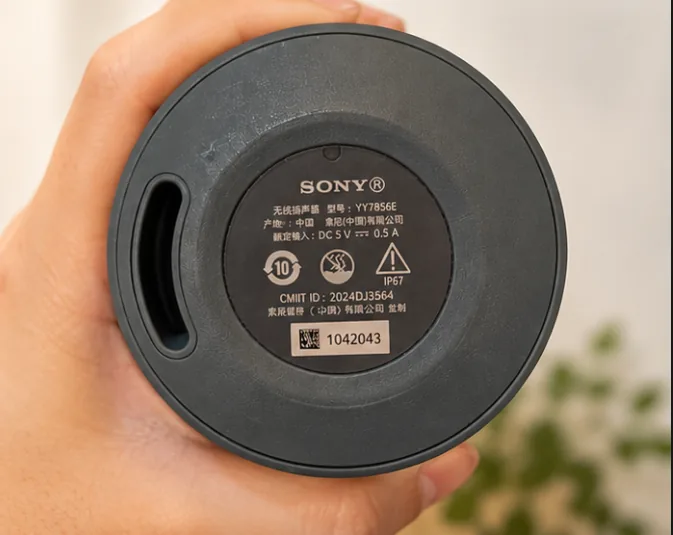
| Water and dust rating | IP67, according to Sony | Useful for outdoor use, splashes, dust, and casual travel |
| Bluetooth | Bluetooth wireless playback | No cable needed; simple phone pairing is the main use case |
| Design | Compact cylinder with strap | Better for hanging or carrying than a boxy speaker with no loop |
| My unit | Model label YY7856E shown on the bottom | The photos show the actual unit used for this review |
Sound: Sony chose low-end fullness over sharp detail
The SRS-XB100 is not a neutral speaker. In my use, it behaves like a small speaker tuned to make bass feel present even when physics is working against it. That is the right move for many casual buyers. A tiny speaker that sounds clean but thin can be disappointing outside; a little extra low-end body makes music feel less empty.
That does not mean it has huge sub-bass or measured high sound pressure. I did not test it with a meter, and I would not describe any pocket-size speaker as a replacement for a larger portable model. A better way to say it is this: Sony appears to trade some mid/high clarity and outright loudness for a warmer, bass-first presentation.
This is why I like it for casual listening but would not use it as my first choice for podcasts, vocal-heavy music, or situations where I want every detail to cut through. The middle range is fine, the treble is fine, but the character is clearly built around making the speaker sound bigger and warmer than it looks.
Battery life is the real advantage
The official 16-hour battery figure is the number that best explains why the SRS-XB100 remains useful. I have not run a controlled battery test, so I cannot confirm Sony's claim minute by minute. But in daily ownership, the speaker has not made battery anxiety part of the experience.
That matters more than it sounds. With small speakers, short battery life changes behavior: you start saving volume, charging before every outing, or leaving it at home. Sony's claimed endurance gives this speaker a calmer role. It can sit in a bag or on a desk and be ready for the next short trip.
Sony SRS-XB100 vs JBL GO 4
The JBL GO 4 is the most useful comparison because it is also small, portable, USB-C rechargeable, and IP67-rated. JBL's official page positions the GO 4 around JBL Pro Sound, punchy bass, a redesigned compact body, Auracast multi-speaker support, and the JBL Portable app. It also lists up to 7 hours of playtime, with additional time available through Playtime Boost.
That gives the two speakers different personalities. Sony is the safer pick if your first question is, "Will this last longer away from a charger?" JBL is more tempting if your first question is, "Will this tiny speaker sound lively and loud for its size?"
| Category | Sony SRS-XB100 | JBL GO 4 |
|---|---|---|
| Best reason to buy | Long battery life and warmer bass-forward casual sound | More energetic small-speaker presentation, stronger mid/high presence, JBL app and Auracast features |
| Official battery claim | Up to about 16 hours | Up to about 7 hours, plus Playtime Boost on supported use |
| Charging | USB-C | USB-C |
| Water/dust rating | IP67 | IP67 |
| Sound character based on evidence available | My unit sounds strongest in bass; mids and highs are ordinary | JBL markets the GO 4 around Pro Sound and punchy bass; based on the brand's small-speaker positioning, it is the one I would consider first for clearer mids/highs and more output energy |
| App ecosystem | Basic use does not require an app | JBL Portable app support is part of the official feature set |
| Multi-speaker features | Sony supports stereo pairing with compatible XB100 units | JBL lists Auracast support for connecting multiple compatible speakers |
Which one would I choose?
I would choose the Sony SRS-XB100 if the speaker is going into a bag for long casual use, small outdoor trips, or background listening where battery life matters more than maximum volume. It is the more relaxed choice: small, durable, bassy, and not demanding.
I would choose the JBL GO 4 if I wanted a tiny speaker with more attack in vocals, more apparent loudness, and a more modern feature set. The shorter official battery claim is the obvious compromise. If you often listen in short sessions and recharge regularly, that compromise may be fine.
The key is not that one is universally better. It is that Sony and JBL appear to solve different problems. Sony feels like a long-lasting mini speaker with enjoyable bass. JBL looks like the more energetic pocket speaker for listeners who care more about sound pressure, mids, highs, app features, and party-style linking.
Reliability after more than a year
So far, I have not had faults, overheating, comfort issues, or software problems with my SRS-XB100. The buttons still work, pairing has not become a major annoyance, and the body has held up normally in my use.
That is only one owner's experience, not a durability guarantee. I have not done drop testing, water immersion testing, teardown inspection, or long-term battery capacity measurement. Still, for a small speaker I bought for convenience, the ownership experience has been refreshingly uneventful.
Who should buy the Sony SRS-XB100
- You want a small Bluetooth speaker that is easy to carry outdoors.
- You care more about bass warmth and battery life than bright detail.
- You want USB-C charging and an IP67-rated body for travel and casual outdoor use.
- You do not want to depend on an app for basic speaker use.
Who should skip it
- You want the loudest possible tiny speaker.
- You listen mainly to podcasts, vocals, acoustic music, or treble-focused tracks.
- You prefer a sharper, more forward mid/high sound.
- You want app EQ features or newer multi-speaker features like JBL's Auracast implementation.
Final verdict
After more than a year, the Sony SRS-XB100 still feels like a sensible little speaker because it understands its job. It is portable, durable enough for casual outdoor use, charges over USB-C, and has the kind of bass-forward tuning that makes a tiny speaker feel more satisfying than expected.
Its limits are equally important. The mids and highs are ordinary, and I would not pick it over the JBL GO 4 if vocal clarity, perceived loudness, or app-supported features were my top priorities. But if you want a small speaker that lasts longer between charges and gives casual music a fuller low-end foundation, the SRS-XB100 remains easy to like.
Sources and method
First-hand notes come from my own SRS-XB100 and more than a year of everyday ownership. Sony and JBL specifications were checked on July 7, 2026. I did not perform lab measurements for frequency response, sound pressure, charging speed, waterproofing, or battery runtime.