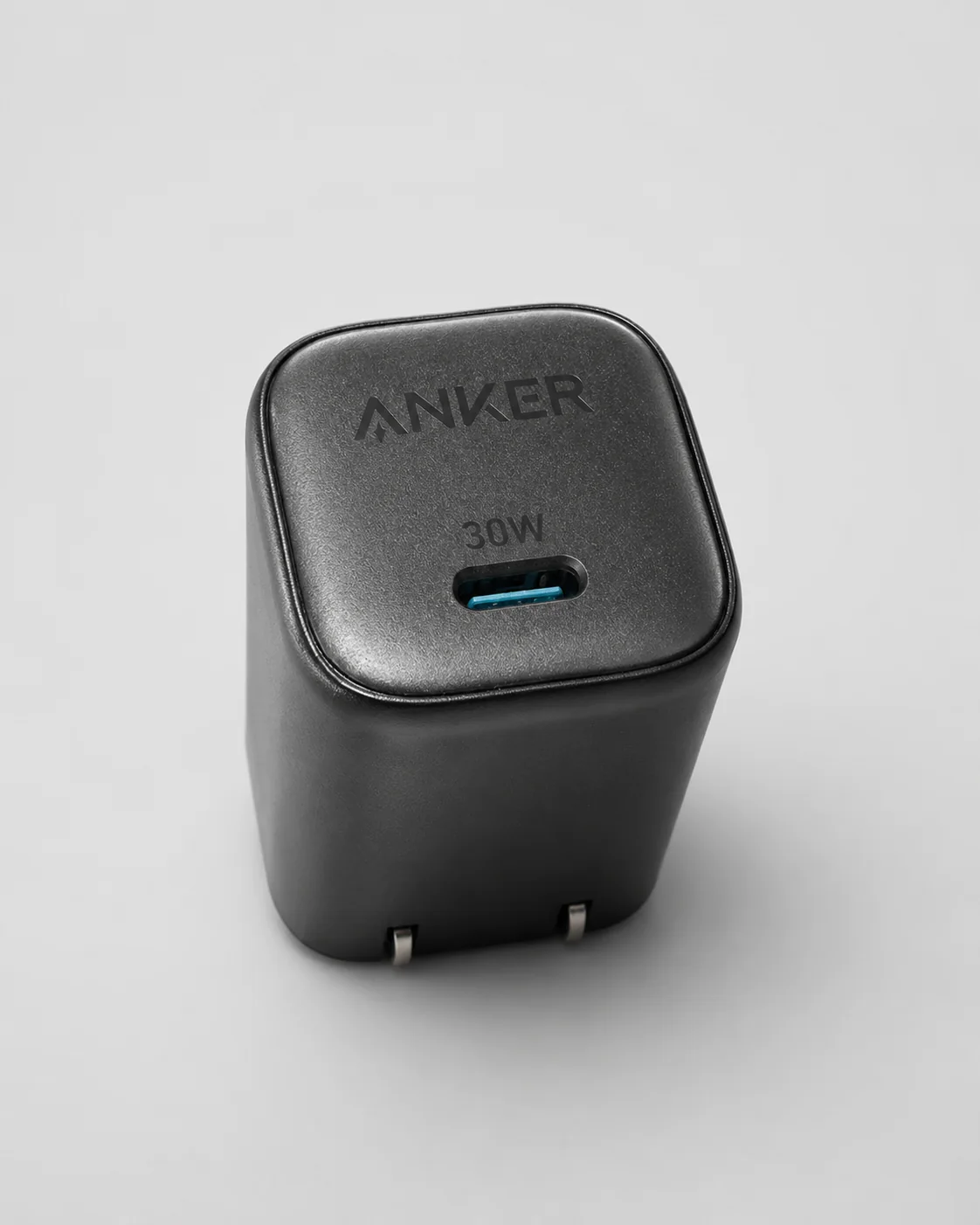
Short answer: 30W is usually enough for phone-first charging and small travel kits. 65W makes more sense if a laptop, larger tablet, handheld gaming PC, or two-device charging setup is part of the plan.
Wattage is a ceiling, not a promise
A charger does not force 30W or 65W into a device. USB Power Delivery lets compatible devices and chargers negotiate a suitable power level. The phone, laptop, cable, temperature, and battery state all affect the result. A 65W charger can still charge a phone safely when the system negotiates correctly; it simply has more capacity available.
The real buying question is less "which number is better" and more "what is the largest device I need to charge without frustration?"
30W vs 65W at a glance
| Use case | 30W charger | 65W charger |
|---|---|---|
| Phone fast charging | Usually enough for many modern phones when USB-C PD is supported | Works, but often not necessary for phone-only use |
| Small tablet or earbuds | Comfortable fit for simple kits | Also works, but size may be overkill |
| Ultrabook laptop | May be slow or insufficient under load | Often a practical target if the laptop's original adapter is in this range |
| Two devices at once | Can feel limited if ports split power | More room for phone plus laptop or tablet |
| Travel size | Usually smaller and lighter | Still portable, but less pocket-friendly |
What the extra watts actually buy you
Stepping from 30W to 65W is not really about charging a phone faster, because most phones cap out well below either figure. The extra headroom does three things: it lets a thin laptop charge at close to full speed even while you are working, it leaves enough budget to charge a phone and a laptop from one multi-port charger, and it gives a larger tablet or handheld gaming PC enough power to gain charge under load instead of slowly draining. If none of those describe you, the money spent on the higher wattage is buying capacity you will not use.
When 30W is the better buy
Choose 30W if your main device is a phone and you like carrying the smallest possible adapter. Apple's fast-charge guidance says iPhone 12 and later need a 20W or higher adapter for fast charging, with a compatible USB-C setup. That makes 30W a reasonable phone-first class without jumping into laptop-sized bricks.
A 30W charger also makes sense as a bedside or desk charger when speed is less important than reliability and compact size. In my own Anker 30W use, the main benefit is not drama; it is that the charger is small enough to stay useful.
When 65W is worth it
Buy 65W when the charger needs to support a laptop or a mixed setup. Many thin laptops ship with adapters around this class, and a 30W unit may not keep up if the machine is awake and working. A 65W multi-port charger can also be a neater travel answer if it clearly explains how power is split between ports.
The warning is port sharing. A "65W" charger may deliver 65W through one USB-C port alone, then split into lower values when a second device is plugged in. Read the label or official spec sheet before assuming it can charge everything at full speed together.
The cable check
Do not evaluate the charger alone. Cables have power ratings, and high-wattage charging depends on the cable as well as the adapter. For a phone-only 30W setup, many decent USB-C cables are enough. For 65W and above, use a cable from a reliable brand with a clear rating.
One charger for everything, or two smaller ones?
There is a genuine tradeoff between carrying a single 65W multi-port charger and carrying two compact 30W units. One charger means one wall plug and one thing to pack, which is tidy for travel, but it also means everything stops charging if you misplace it, and multi-port models can split their power in ways that slow a laptop when a phone is attached. Two small chargers are more flexible and add redundancy, at the cost of a second plug and a little more bag clutter. For a desk that never moves, a single higher-wattage charger is usually the calmer answer; for travel, the choice depends on how many wall outlets you expect to find.
Final verdict
For a phone, earbuds, and a small bag, 30W is the cleaner choice. For a laptop, tablet-heavy setup, or one-charger travel kit, 65W is more flexible. Buy the wattage that matches your largest device and the number of ports you use, not the biggest number that fits the budget.