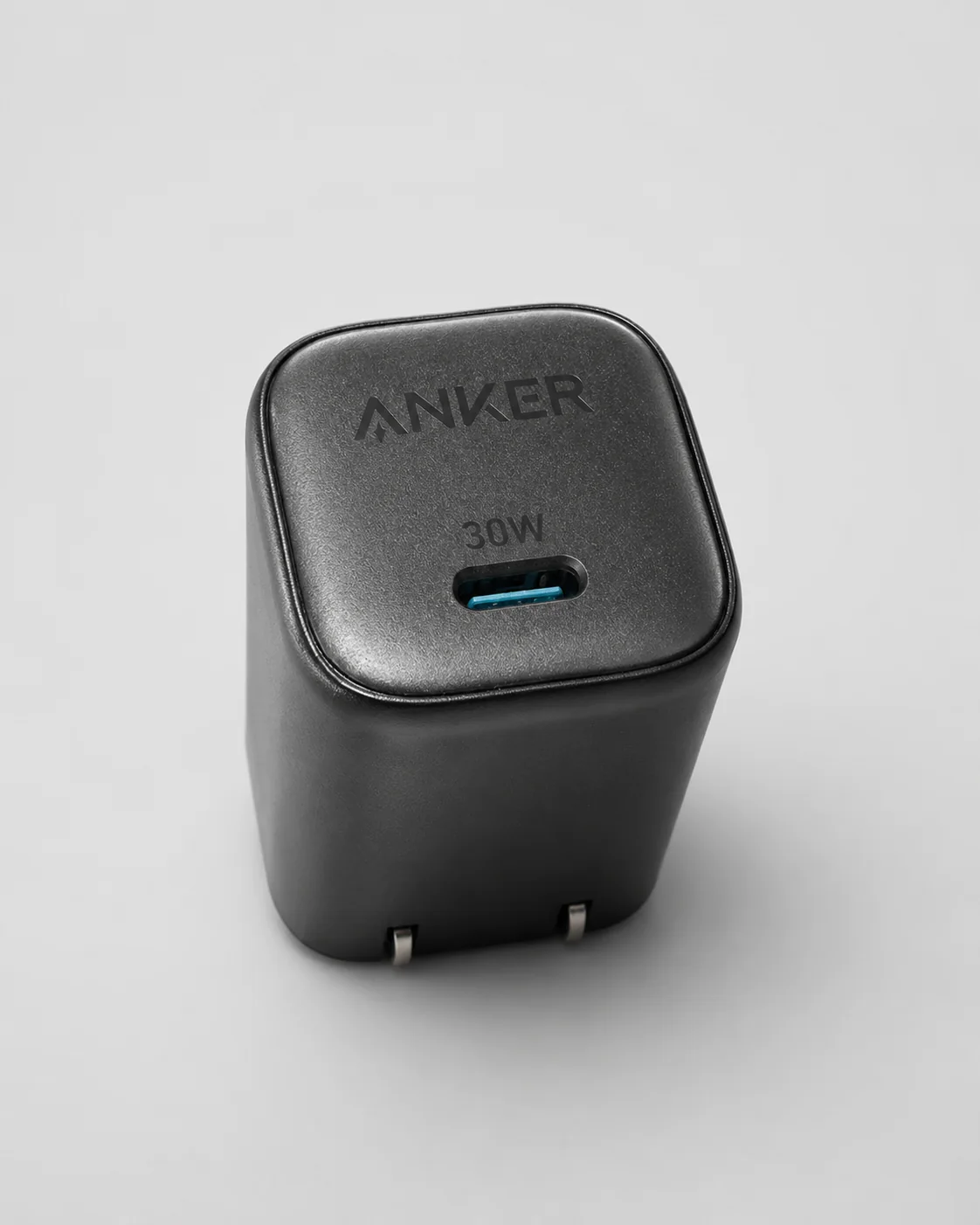
Short answer: 30W is the maximum the charger can offer under supported conditions, not a promise that every device will draw 30W all the time. Phones often charge fastest when the battery is low, then slow down to protect the battery and manage heat.
30W is a ceiling, not a constant speed
A 30W USB-C charger can be a practical sweet spot for phones, earbuds, small tablets, and travel kits. But charging is negotiated. The device asks for a voltage and current profile it supports, the charger offers what it can, and the cable must be suitable for the job. The result changes as the battery fills.
USB Power Delivery exists to make that negotiation more flexible. USB-IF explains that devices can take only the power they require and request more when needed. That is why the same charger may behave differently with a phone, tablet, handheld console, or laptop.
Why your phone may not use the full 30W
- The phone's charging system may have a lower maximum.
- The phone may only peak near low battery percentages.
- Heat can reduce charging speed.
- The cable may not support the needed profile.
- Using the phone while charging can change heat and power behavior.
What the 30W number actually combines
Wattage is just volts multiplied by amps, and that is why two chargers labeled "30W" can behave differently. USB Power Delivery negotiates in fixed voltage steps — commonly 5V, 9V, 15V, and 20V — and each step is paired with a current limit. A 30W charger usually reaches its peak at roughly 9V/3.3A or 15V/2A. What matters for your device is whether the charger offers the specific voltage your device wants, not just the headline number. A charger that only hits 30W at 20V can be excellent for a small laptop yet unremarkable for a phone that charges fastest at 9V.
This is also why the per-port rating on multi-port chargers matters. A "30W" port can drop to 15W the moment a second device shares the same charger, because the total power budget is split. Always read the small print that lists output for one port versus two ports in use.
Where 30W makes sense
For many modern phones, a 30W USB-C PD charger is small, affordable, and strong enough to reach fast-charge behavior where supported. Apple says iPhone 12 and later need a 20W or higher power adapter for fast charging, while certain newer models and MagSafe cases can benefit from higher adapters under specific conditions. That makes 30W a reasonable phone-first target, not a universal laptop solution.
Where 30W is not enough
A laptop that ships with a 65W adapter may run from 30W only slowly, or it may drain under heavy load while plugged in. Larger tablets, handheld gaming PCs, and multi-port setups can also outgrow 30W. If the device is your work machine, match the original adapter class instead of hoping a small phone charger will be fine.
How to see what your phone is really pulling
If you want evidence rather than guessing, there are three practical ways to check. Some phones show an estimated "fast charging" note or a time-to-full label on the lock screen when a capable charger is connected. A cheap inline USB-C power meter, placed between the charger and cable, shows live voltage and current, so you can watch the number climb near empty and fall as the battery fills. And the simplest test of all is timing: note how long the same phone takes from 20 to 80 percent on the new charger versus the one it replaced. If the times match, the extra wattage was never being used.
Size, heat, and GaN
One reason 30W chargers became popular is that gallium-nitride (GaN) models pack that output into a plug barely larger than the old 5W cube. Smaller does not mean weaker, but it does concentrate heat, and heat is one of the things that makes a device throttle its own charging. A compact charger buried in a cramped power strip may deliver a little less than the same charger in open air. It is a small effect, but it explains why charging speed can vary in the real world even with the right adapter and cable.
Buying checklist
- Look for USB-C Power Delivery support.
- Check the charger label for output profiles.
- Use a known good USB-C cable.
- Do not expect peak wattage from 80% to 100% battery.
- Buy more than 30W if a laptop is part of the plan.
Final verdict
30W is a sensible everyday charger class for phones and small devices. It is especially good when you value a compact adapter more than one brick for every gadget. For laptops and multi-device charging, step up to a higher-wattage charger with clear per-port output rules.